
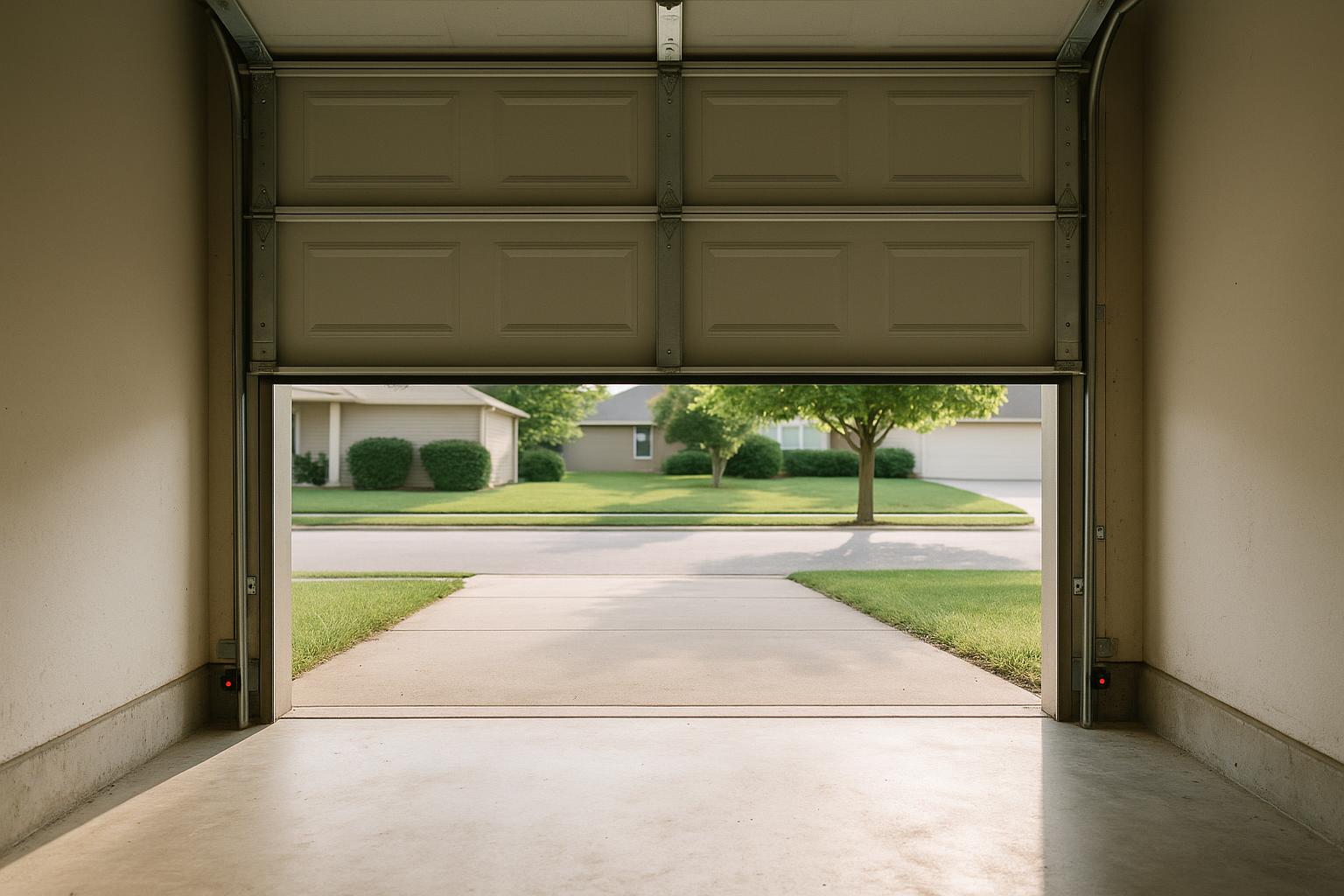
That Frustrating Moment When Your Garage Door Won't Stay Closed
You press the button on your remote, watch the garage door start its descent, and then — just before it reaches the floor — it stops, reverses, and goes right back up. You try again. Same thing. Maybe you try holding the wall button. Still reverses.
This is one of the most common garage door problems homeowners in Gettysburg deal with, especially as seasons change and temperatures swing. The good news is that it's almost always fixable. The key is understanding why it's happening so you can determine whether it's a quick DIY adjustment or something that requires a professional.
The Safety Reversal System: What It Does and Why It Matters
Before we get into causes, it helps to understand how modern garage door openers work. Every garage door opener manufactured after 1993 is required by federal law to include two safety reversal features:
- Photo-eye sensors: Two small sensors mounted near the bottom of the door tracks on each side. They project an invisible beam across the opening. If anything breaks that beam while the door is closing, the door reverses.
- Auto-reverse mechanism: If the door physically contacts an object while closing, it's designed to reverse direction immediately.
These features exist to prevent injuries and property damage. They save lives. But when they malfunction or get triggered unnecessarily, they can make your garage door essentially unusable.
Common Reasons Your Garage Door Reverses Early
1. Misaligned or Dirty Photo-Eye Sensors
This is the number one cause of unexpected reversals, and it's often the easiest to fix. The photo-eye sensors on either side of your garage door opening need to be perfectly aligned with each other. If one gets bumped — by a bike, a trash can, a lawnmower, or even a curious pet — the beam breaks and the door thinks something is in the way.
Dirt, cobwebs, and moisture can also block the sensor lens. In Gettysburg, where we get humid summers and dusty conditions near older properties, sensor lenses can get grimy faster than you'd expect.
What to try: Wipe both sensor lenses with a soft cloth. Check that both sensors have a steady green light (not blinking). Gently adjust them until they're pointed directly at each other.
2. The Close-Limit Switch Needs Adjusting
Your garage door opener has limit settings that tell it how far the door should travel when opening and closing. If the close-limit is set incorrectly, the opener thinks the door has hit the floor (or an obstruction) before it actually has. It interprets this as resistance and triggers the auto-reverse.
What to try: Most openers have limit adjustment screws on the back or side of the motor unit. Consult your owner's manual for the specific location and turn the close-limit screw in small increments. Test after each adjustment.
3. Worn or Broken Springs
Garage door springs counterbalance the weight of the door, making it possible for the opener to lift and lower it smoothly. When springs wear out or lose tension, the door becomes heavier than the opener expects. The motor strains against the extra weight, interprets it as an obstruction, and reverses.
If your door feels noticeably heavy when you try to lift it manually, worn springs are likely the culprit. Spring replacement is not a DIY job. These components are under extreme tension and can cause serious injury if handled improperly. This is one repair where calling a professional is the right move every time.
4. Track Problems
Bent, misaligned, or obstructed tracks can cause the door to bind or stick as it travels downward. When the opener encounters this resistance, it reverses. Look along both vertical and curved track sections for visible bends, gaps between the track and the wall, or debris caught in the track.
Minor obstructions can sometimes be cleared by hand, but bent tracks typically need professional attention to avoid making the problem worse.
5. Worn Rollers or Hinges
Over time, the rollers that guide your door along the tracks can wear flat, crack, or seize up. Worn hinges can also cause binding. Both issues create friction that the opener may interpret as an obstruction. If you hear grinding, squealing, or popping sounds during operation, worn hardware is a likely suspect.
6. Opener Force Settings Are Too Low
Your opener has force settings that control how much power it uses to open and close the door. If the closing force is set too low, the opener gives up too easily and reverses at the slightest resistance. This sometimes happens after a power outage resets the opener or after someone adjusts settings without realizing the impact.
What to try: Increase the down-force setting in small increments. Be careful not to set it too high, as this can override the safety features that protect people and objects from being crushed.
When Seasonal Changes in Gettysburg Cause Problems
Living in south-central Pennsylvania means dealing with real temperature swings. Cold winter mornings can cause metal tracks to contract slightly and lubricant to thicken, increasing friction. Summer heat can cause expansion. These subtle changes are often enough to trigger a reversal in a system that was already borderline.
This is one reason we recommend annual maintenance and tune-ups. A professional inspection catches worn parts, lubrication issues, and alignment problems before they leave you standing in your driveway wondering why the door won't close on the coldest morning of the year.
What to Do Before You Call for Help
Before picking up the phone, run through this quick checklist:
- Clean both photo-eye sensor lenses with a soft, dry cloth.
- Check that both sensors have steady indicator lights and are aligned.
- Remove any objects near the door opening that could be breaking the sensor beam.
- Inspect the tracks for visible obstructions or damage.
- Try operating the door using the wall button instead of the remote to rule out a remote issue.
- Disconnect the opener and try lifting the door manually. If it's extremely heavy, you likely have a spring problem.
If none of these steps solve the problem, or if you suspect spring or track damage, it's time to call in a professional.
Getting It Fixed the Right Way
At Gettysburg Garage Door Service, we see reversing garage doors regularly — especially during seasonal transitions. Most of the time, the fix is straightforward once we diagnose the root cause. Whether it's a sensor realignment, a limit switch adjustment, a spring replacement, or a full opener repair, we explain exactly what's going on and what it takes to fix it before we start any work.
We serve homeowners across Gettysburg, Biglerville, Littlestown, New Oxford, Hanover, and Fairfield. If your garage door is giving you trouble, don't keep pressing the button and hoping for a different result. Give us a call and we'll get it sorted out — usually in a single visit.