
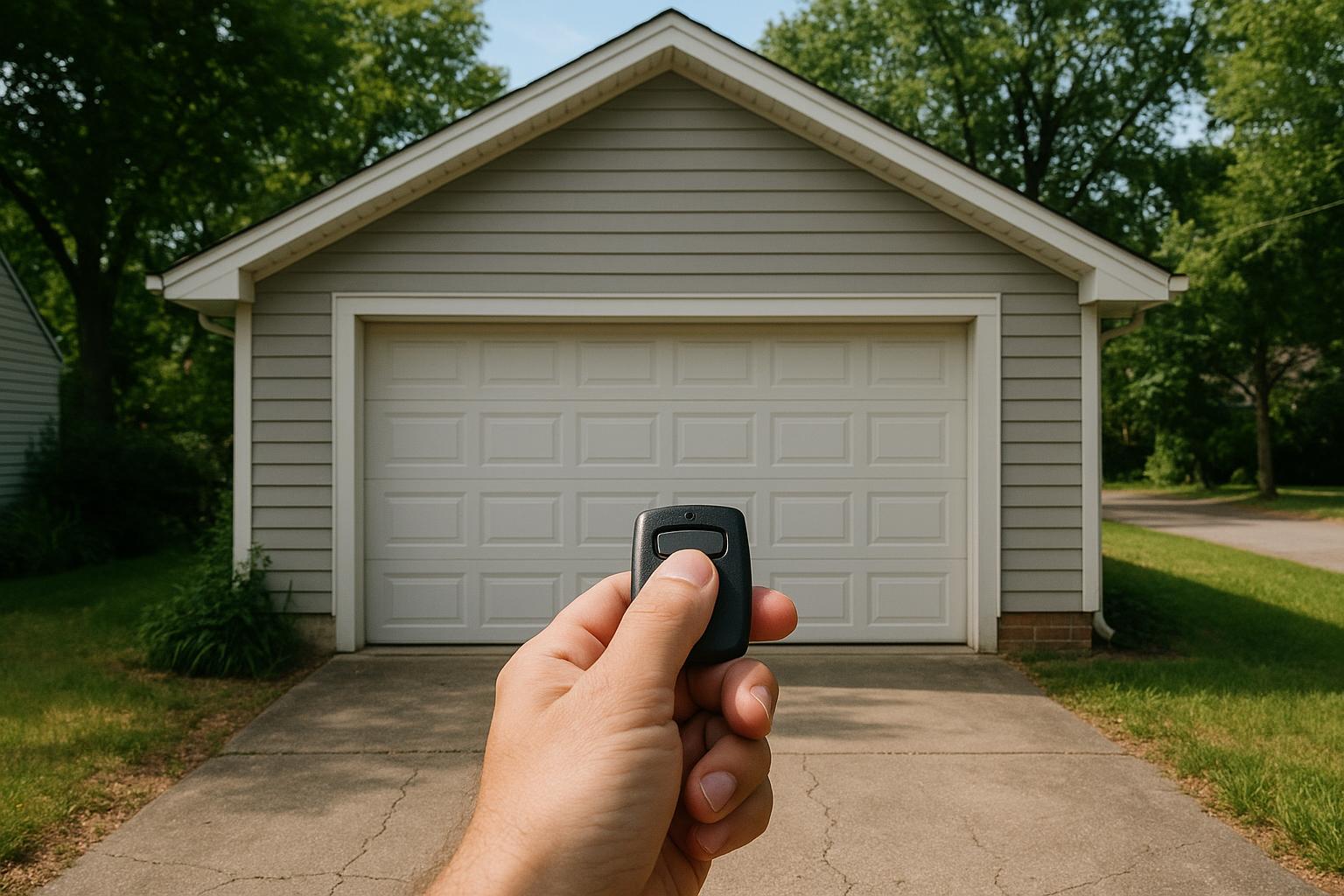
Stuck in the Garage? Don't Panic.
You're running late for work, you press the button on your garage door opener, and… nothing. Or maybe the motor hums but the door doesn't budge. Few home problems are as immediately frustrating as a garage door that won't open, especially when your car is trapped inside.
Before you start worrying about a major repair bill, take a breath. Many of the reasons a garage door refuses to open are straightforward, and some you can even troubleshoot yourself. Here's a practical guide to figuring out what's going on — and knowing when it's time to call in a Gettysburg garage door professional.
Step 1: Check the Obvious Things First
It sounds simple, but the most common causes are often the easiest to overlook:
- Is the opener plugged in? Power cords can get knocked loose, especially if you use your garage as a workshop or storage area. Check the outlet and make sure the unit has power.
- Did the breaker trip? Head to your electrical panel and see if the circuit that serves your garage has flipped. Reset it and try again.
- Are the remote batteries dead? If your wall-mounted button works but your remote doesn't, swap in fresh batteries before assuming something worse.
- Is the lock engaged? Some garage doors have a manual lock bar or slide lock. If it's been accidentally engaged, the opener will strain against a locked door and fail to move it.
These quick checks solve the problem more often than you'd think. If everything looks fine, it's time to dig a little deeper.
Step 2: Look at the Safety Sensors
Modern garage door openers are equipped with photo-eye sensors mounted near the bottom of the door tracks on each side. These sensors send an invisible beam across the opening, and if anything breaks that beam — a trash can, a bicycle, a cobweb — the door won't close. But sensor issues can also prevent the door from operating correctly in general.
Here's what to check:
- Alignment: The two sensors need to face each other directly. If one has been bumped or shifted, the beam won't connect. Look for a steady green light on both units. A blinking light usually means they're misaligned.
- Dirt and debris: Wipe the sensor lenses with a soft cloth. Dust, spider webs, and moisture can block the beam.
- Wiring: Inspect the thin wires running from each sensor back to the opener unit. If a wire is frayed, pinched, or disconnected, the system won't function properly.
Step 3: Try the Emergency Release
Every garage door opener has a manual release — usually a red handle hanging from a cord on the opener rail. Pulling this disconnects the door from the motorized carriage, allowing you to lift the door by hand.
If the door lifts smoothly by hand, the problem likely lies with the opener itself rather than the door or its mechanical components. If the door feels extremely heavy or won't move at all when you try to lift it manually, you may be dealing with a broken spring or a problem with the door's balance — and that's a situation where you should stop and call a professional.
A word of caution: Never attempt to manually open a garage door that feels unusually heavy. A door without functioning springs can weigh several hundred pounds, and trying to force it open risks serious injury.
Step 4: Listen to What the Opener Is Doing
The sounds your opener makes — or doesn't make — can tell you a lot about what's wrong:
- No sound at all: This usually points to a power issue, a burned-out motor, or a faulty circuit board in the opener.
- Motor runs but the door doesn't move: The gear inside the opener that drives the door may be stripped. This is a common wear-and-tear issue, especially in openers that are more than ten years old.
- Clicking or humming without movement: The opener is trying to engage but something is preventing it. This could be a locked door, a broken spring, or an obstruction in the tracks.
Step 5: Inspect the Tracks and Hardware
Take a close look at the metal tracks on either side of the door. You're looking for:
- Bent or dented sections: Even a small dent can prevent the rollers from passing through smoothly, causing the door to jam.
- Debris in the tracks: Leaves, small rocks, or tools that have fallen into the track can block movement.
- Loose brackets: The brackets that hold the tracks to the wall can loosen over time, causing the tracks to shift out of alignment.
If you spot a minor obstruction, carefully remove it. But if the tracks are visibly bent or misaligned, this is a repair best left to someone with the right tools and experience.
When to Call a Professional
Some garage door problems are safe to troubleshoot on your own. Others are not. Here's a clear rule of thumb: if the issue involves springs, cables, or anything under high tension, call a professional. These components store an enormous amount of energy, and attempting a DIY repair can result in serious injury or further damage to your door.
You should also call for help if:
- You've gone through the steps above and the door still won't open
- The door opens partway and then stops or falls back down
- You notice frayed cables or hardware that looks damaged
- The opener is making unusual sounds you can't identify
- The door feels unbalanced or crooked when you try to lift it manually
Here in Gettysburg, we see all of these issues regularly — especially after long winters when cold temperatures have taken a toll on springs, lubricant, and weatherstripping. The good news is that most problems can be resolved quickly once a trained technician gets eyes on the situation.
Preventing Future Lockouts
Once your door is working again, a little preventive care goes a long way toward making sure you don't end up stuck again:
- Schedule annual maintenance. A professional tune-up catches worn parts before they fail completely.
- Lubricate moving parts regularly. Rollers, hinges, and springs benefit from a silicone-based lubricant applied every few months.
- Test the balance. Disconnect the opener and lift the door halfway. If it stays in place, the balance is good. If it drifts up or falls down, the springs may need adjustment.
- Keep spare remote batteries on hand. It's a small thing, but dead batteries are one of the most common reasons people think their door is broken.
- Keep the tracks clean. A quick wipe-down every season prevents buildup that can cause jams.
Get Your Door Moving Again
A garage door that won't open is more than an inconvenience — it can affect your security, your schedule, and your peace of mind. If you've tried the basics and your door still isn't cooperating, Gettysburg Garage Door Service is here to help. We'll diagnose the problem, explain what's going on in plain English, and get your door back on track — usually the same day you call.
Whether you're in Gettysburg, Hanover, Littlestown, or anywhere in the surrounding area, don't let a stuck garage door ruin your day. Give us a call and let's get it fixed.